
Baking & Nutrition
At Mossley Hill Childcare our children have opportunities to transform into little chefs and explore the joys of baking. Children are introduced to food preparation & baking in many different age appropriate ways.
Role-Play
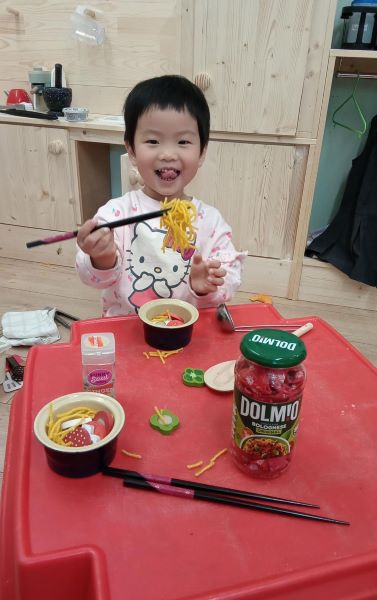
Cooking & baking are an integral part of role play in our home corners. Children pretend to be chefs or parents preparing food and creating their own scenarios. Through play, children can count plates, cups and ingredients, explore quantities, and use words such as more, less, full and empty. They develop fine-motor skills by handling pretend cooking utensils which supports fine-motor skills and coordination through stirring, rolling, and cutting.
Storybooks & Rhymes
We connect baking to classic tales like The Gingerbread Man, Pat-a-Cake, or The Little Red Hen to bring the story to life through language and roleplay. Cooking activities follow on from reading stories and learning can then be linked to keeping healthy e.g. cleaning our teeth
No-Cook Activities
No cook activities introduce children to textures & skills before they embark on preparing real food. Measuring dry goods into individual bowls, or add tactile stations like dry pasta sorting, or play-dough rolling and cutting.
No-Cook activities involving simple assembly tasks like fruit kebabs, vegetable dips, or sandwich building, which involve children in preparing their own snacks.
Children have great fun with creative decorating activities such as icing biscuits and adding sprinkles to their own design.
Simple Bakes
Following simple recipes with help from our practitioners has many benefits:
- Math & Measuring: Use counting, weighing, and volume concepts by having children count out scoops of flour, compare heavy and light ingredients, or look at shapes (circles, squares, rectangles).
- Baking allows children to experience a variety of textures, colours and smells. Through touching flour, kneading dough, or mixing ingredients, children develop their tactile senses and learn to distinguish different textures. The vibrant colours of fruits and vegetables also help in visual stimulation and recognition.
- Following simple instructions
- By involving children in the preparation of meals, they become more interested in trying new foods.
- Stirring, rolling, whisking and cutting, help children develop their fine motor skills. These tasks require precision and coordination, which are crucial for their overall motor development.